
- Stock: In Stock
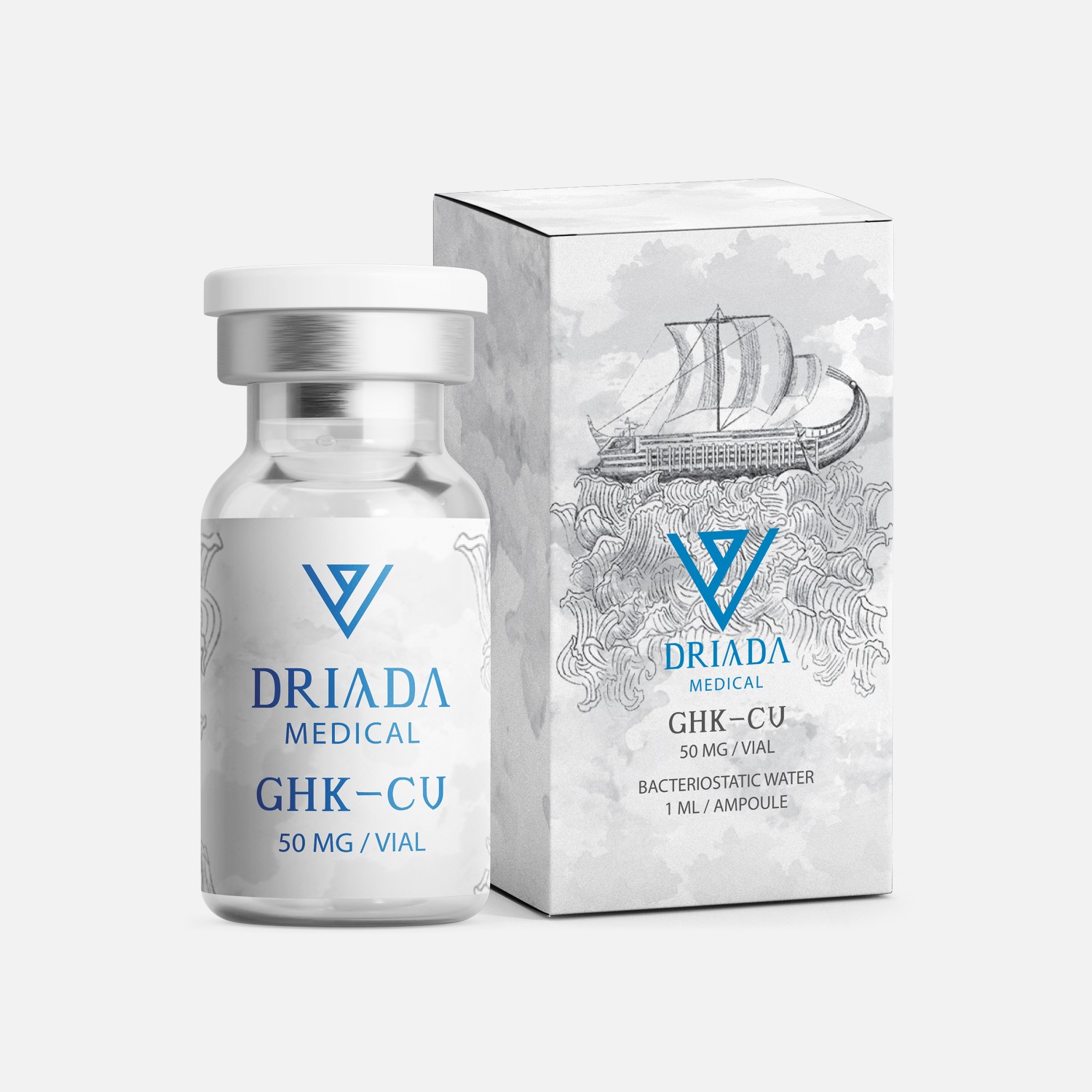
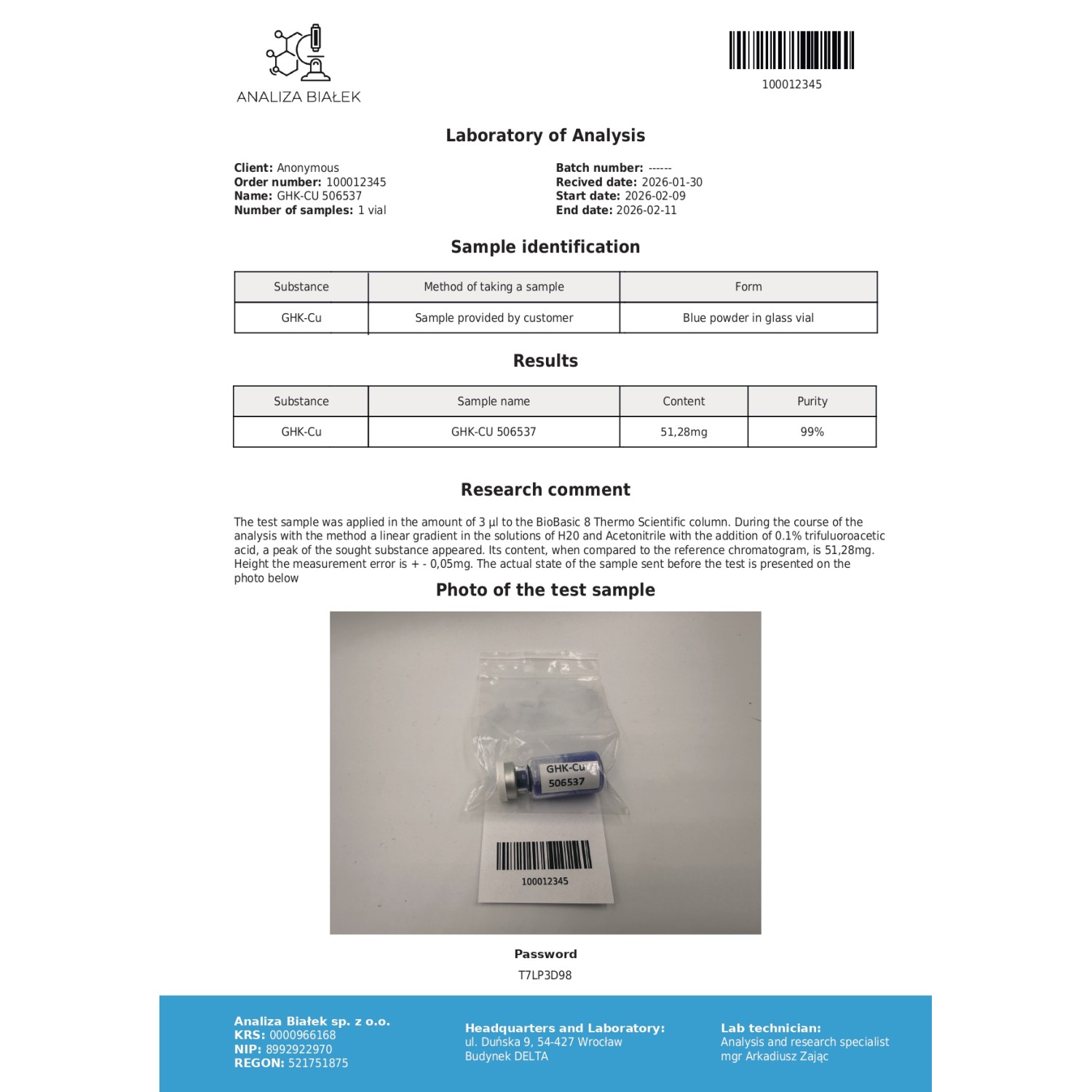
- Composition: GHK-Cu 50 mg.
- Category: peptide.
- Purpose: restoration of tissue, skin and hair.
- Form: vial with 50 mg of lyophilized powder + 1 ml ampoule of bacteriostatic water for reconstitution.
- Administration: subcutaneous injections.
What is GHK-Cu?
GHK-Cu 50mg is a copper peptide associated with skin quality and regeneration, hair growth, and the healing of soft tissues such as skin or tendons. This peptide is naturally found in plasma and cells, but can be taken as injections or tablets to increase its levels.
This product is often used by athletes to recover from injuries and heavy training, to reduce the negative impacts of steroids such as acne and hair loss, and to generally maintain health during cutting phase and extreme diets.
Main effects
✨ Improves skin quality, elasticity, and texture.
💆♂️ Accelerates and stimulates hair growth.
🩹 Aids recovery after injuries or procedures.
🦴 Improves the condition of joints, tendons, and ligaments.
🧠 Promotes nerve tissue restoration and supports cognitive function.
🧬 Stimulates collagen and extracellular matrix repair.
🔥 Reduces inflammation and redness.
💉 Supports microcirculation and nutrient delivery to tissues.
GHK-Cu usage guideline
Reconstitution
If you are buying GHK-Cu peptide for the first time and don’t know how to dilute it yet — mix the 50 mg vial with 3 ml of bacteriostatic water (the kit only includes 1 ml of water, you need to buy additional bacteriostatic water for dilution). Add the liquid slowly along the inner wall of the vial and let the powder dissolve without shaking.
After reconstitution, the concentration becomes:
- 1 ml (whole 100IU insulin syringe) ≈ 16.6 mg of GHK-Cu.
- 0.1 ml (1/10 of syringe) ≈ 1.66 mg.
Example of a protocol
The usual dose is around 1–2 mg.
If you diluted the product the way we described earlier, then this will be the most convenient option:
- 0.1 ml ≈ 1.66 mg — this is your starting dose.
- Increase by 0.05–0.1 ml every 5–7 days if needed.
- Working range: 0.2–0.3 ml per day.
- Use daily or 5× per week depending on preference.
- Course length: 4–8 weeks.
- No taper needed — simply stop when the cycle ends.
What can it be combined with?
- GHK-Cu + BPC-157: stronger tissue repair and anti-inflammatory effect.
- GHK-Cu + TB-500: enhanced tendon/ligament regeneration.
- GHK-Cu + CJC-1295 /Somatropin HGH: increased collagen synthesis through GH receptor upregulation.
Precautions
- Avoid use during active cancer (theoretical risk due to tissue-regeneration activity).
- If serious side effects occur, stop using the drug.
- Be sure to disinfect the injection site and use disposable needles.
- Buy GHK-Cu copper peptide only from trusted and verified resellers.
Possible side effects
- Mild redness or itching at the injection site.
- Rare allergic reactions.
- Increased skin sensitivity at high doses.
GHK-Cu is generally considered low‑risk with no major adverse effects documented.
How to store?
- After reconstitution, store the peptide in a refrigerator at 2–8°C, away from sunlight.
- Do not freeze the diluted peptide.
- After dilution, if storage conditions are met, the peptide can be used for more than a month, usually within 2–3 months.
How does GHK-Cu work?
GHK-Cu is a peptide that becomes biologically active only after binding to a copper ion. Once activated, the molecule changes shape, allowing it to interact with cells, initiating regenerative processes.
Binding to copper and triggering regeneration
After binding to Cu²⁺, the activated GHK-Cu complex begins to interact with skin and connective tissue cells. It signals fibroblasts (the cells responsible for tissue repair) to increase synthesis of:
- collagen, the main protein responsible for the strength and elasticity of skin and connective tissue;
- elastin, a protein that provides elasticity and the ability of tissues to stretch and return to shape;
- extracellular matrix glycoproteins, molecules that form the framework of tissues and participate in their restoration and hydration.
Studies show that GHK-Cu is capable of altering the activity of more than 4,000 genes associated with regeneration, cell protection, and the formation of healthy tissue (Pickart et al., 2015).
Effect on hair follicles
There are two main mechanisms that explain the product’s positive effect on hair growth and quality:
- Improved microcirculation in the scalp allows hair follicles to more effectively receive oxygen, amino acids, vitamins, and other nutrients that are part of hair and positively influence its growth.
- Regulation of dermal papilla cells (DPCs), specialized cells located at the base of the hair follicle, which play a key role in regulating the hair growth cycle. The peptide stimulates a faster transition from telogen to anagen and also prolongs the anagen phase, the phase when active hair growth occurs.
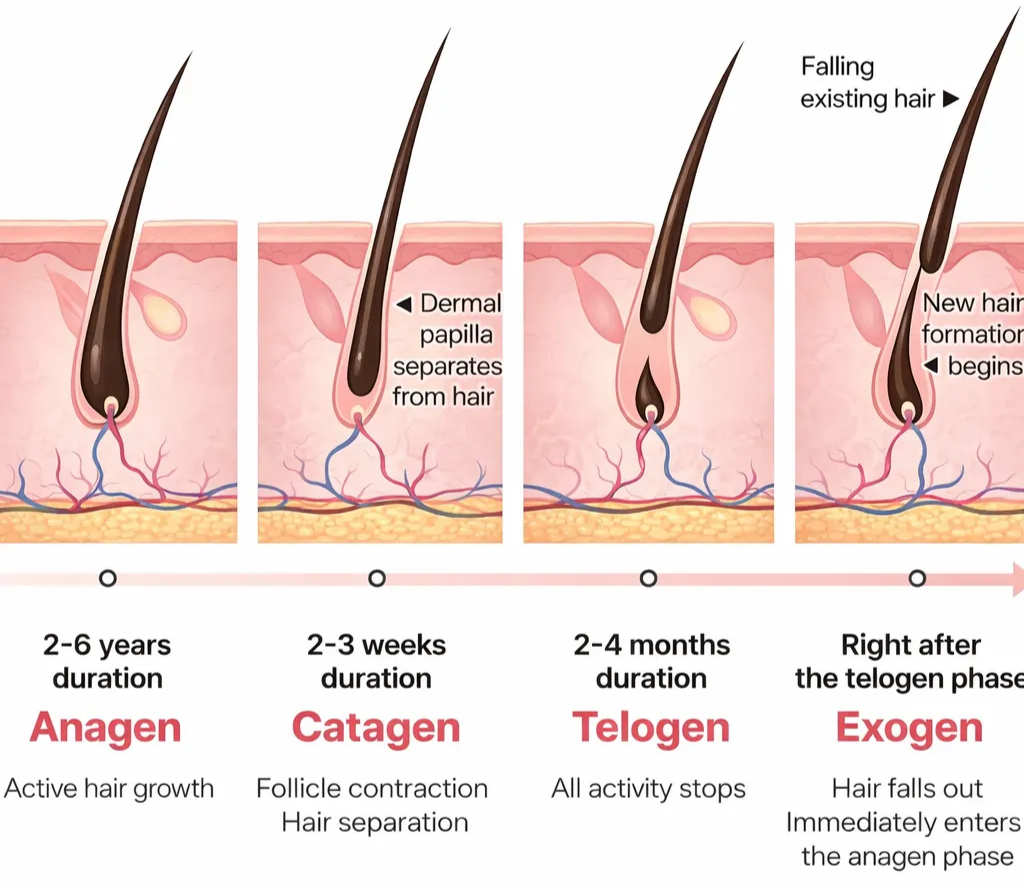
GHK-Cu also influences the expression of genes associated with skin cell differentiation and survival, which may indirectly support hair density. Animal skin experiments show that copper peptides (including GHK-Cu) improve epidermal structure and vascularity, which theoretically promotes better conditions for hair growth.
A study Liu et al., 2023 demonstrated improved hair follicle density and a stimulating effect on hair growth.
Anti-inflammatory effect and improved microcirculation
GHK-Cu reduces proinflammatory cytokine levels by interfering with the inflammatory signaling cascade, specifically by suppressing the activity of NF-κB, a key protein responsible for triggering inflammatory responses in the body. This reduces the production of molecules such as TNF-α, IL-6, and IL-1β, which support inflammation. At the same time, GHK-Cu increases the production of anti-inflammatory factors (such as IL-10), which helps tissues transition more quickly from the inflammatory stage to the healing stage.
Furthermore, the peptide improves tissue blood flow by stimulating the release of nitric oxide (NO), which dilates blood vessels. As a result, damaged areas receive more oxygen and nutrients, swelling is reduced, and the healing process is accelerated.
This effect has been studied for a long time, for example, in the study Maquart et al., 1988, where GHK-Cu increased collagen synthesis and accelerated skin regeneration.
Brain and neuroprotection
Research suggests that GHK-Cu may support the nervous system by promoting neuronal growth, creating a more favorable environment for neuronal survival, and improving repair processes after injury (Pickart et al., 2012). In experiments from 1979, the peptide enhanced the growth of neuronal processes and expanded cell development zones even with low levels of nutritional factors, suggesting its role in supporting the structure of nerve tissue.
Later studies (Ahmed et al., 2005) showed that GHK enhances the production of neurotrophic factors and reduces inflammation at the site of nerve injury, thereby accelerating nerve recovery. Gene analysis (Pickart et al., 2017) also demonstrates that the peptide supports neuronal defense mechanisms and reduces neuroinflammation. Taken together, these data suggest that GHK-Cu creates more favorable conditions for nerve tissue regeneration and its resistance to stress factors, although confirmation in humans still requires further research.
Tendon recovery
GHK-Cu enhances tendinocyte activity and increases the expression of type I collagen, a key component of tendons. This leads to stronger and faster tendon repair (Pickart et al., 2015, Cushman et al., 2024).
Potential impact on organs in systemic lesions
In experiments on mice with damaged lungs, it enhanced the activity of protective enzymes that fight harmful substances (such as free radicals). It also reduced inflammatory signals in the body. As a result, tissue damage was reduced, and inflammation was reduced (Park et al., 2016).
Overall, thanks to the enhanced work of antioxidant enzymes and the reduction of general inflammation, this peptide helps organ cells cope with oxidative stress and toxic products, accelerating tissue regeneration (Pickart et al., 2018).
FAQ
Can GHK-Cu be combined with steroid cycles to reduce inflammation and side effects?
Yes, the peptide can be safely combined with other anabolic steroids, as it will only reduce the overall inflammation caused by the pharmacological course and also help avoid side effects such as acne or baldness. You can always buy GHK-Cu peptide injections in our online store, as well as other medications.
How effective is GHK-Cu in reducing inflammation after intense training and cutting?
The drug is highly effective during periods of high exercise or restrictive diets, when inflammation and tissue stress increase. It will help reduce overall inflammation after exercise and speed up recovery.
Does GHK-Cu reduce hyperpigmentation and post-acne marks when used after peels or laser treatments?
This peptide is widely used in aesthetic medicine to speed up skin healing after peels, microneedling, and laser treatments. It reduces post-inflammatory pigmentation and redness and accelerates skin regeneration, leaving it smoother and more even.
Does GHK-Cu help with hair loss in men and women, including after steroid cycles?
Yes, it can improve hair growth by improving microcirculation and reducing scalp inflammation, which can be useful for androgenic alopecia in men and women, as well as hair loss caused by hormonal imbalances, especially after taking AAS.
 Independent reviews on peds.topeds.to is an independent community forum — see the feedback its members posted about this product. Read →